Most QA learning resources blur together after a while.
You open them hoping for something practical and end up with another generic explanation about testing a banking application. So when I clicked on QA Decoded while searching for an answer about equivalence partitioning for a junior engineer on my team, I wasn’t expecting much.
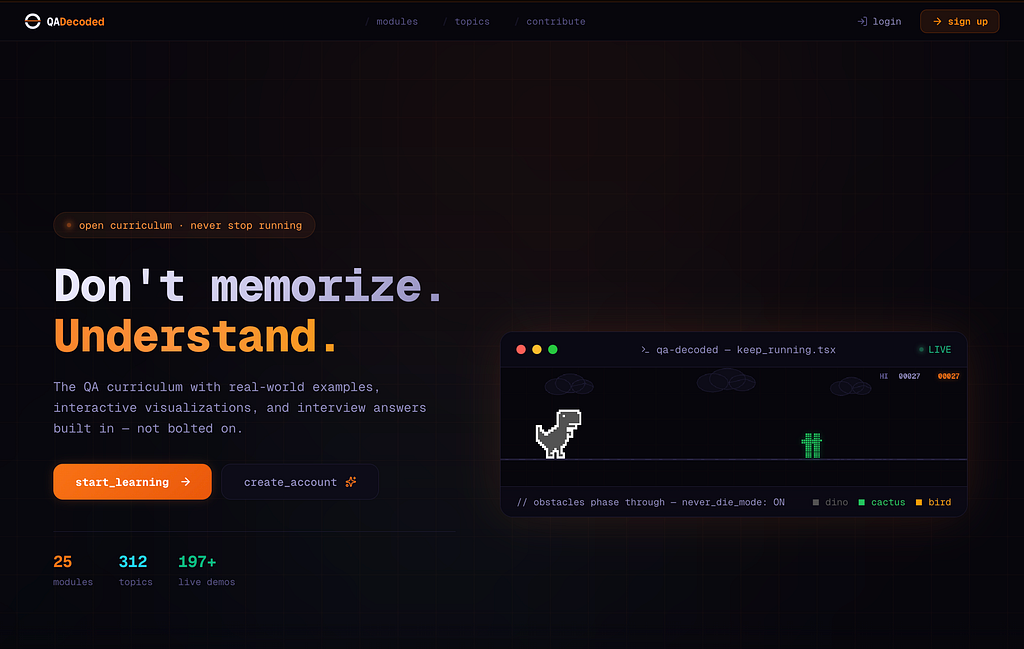
I clicked mostly out of habit. Then I stayed much longer than I expected.
I’ve spent seven years in QA. I’ve gone through the usual cycle of tutorials, certification material, onboarding docs, testing blogs, YouTube explainers, and “complete QA roadmaps.” Most of them are fine. Few are memorable.
This one stood out. Not because it teaches something revolutionary — it doesn’t. It stood out because it accidentally addresses one of the biggest problems I keep seeing in modern QA teams: The Fundamentals Gap.
The Fundamentals Gap Is Real
Entry-level QA engineers today are in a strange position. The tooling is better than it’s ever been. AI can fill knowledge gaps instantly. You can generate test cases, automation scripts, and API collections without fully understanding the reasoning behind them.
That’s useful for shipping fast. But it’s dangerous for long-term growth.
I’ve interviewed candidates who could write a flawless automation script but struggled to explain basic Boundary Value Analysis. I’ve onboarded juniors who knew how to operate complex test management tools but couldn’t describe what actually makes a test case good.
I don’t even blame them. The industry changed. It became possible to skip the foundations and still appear productive for a while.
The problem is that “fine” has an expiration date. In QA, the gaps in your foundation always show up at the worst possible time: a missed edge case in production, a test suite that passes everything but catches nothing, or a sprint where no one can explain why the quality metrics are trending down.
Shortcuts work in the short term, but you can’t build a high-scale career on a hollow base.
Where QA Decoded Fits
QA Decoded is a free platform built specifically for that foundational layer. It covers the “unsexy” stuff: defect management, test design techniques, API basics, and performance concepts.
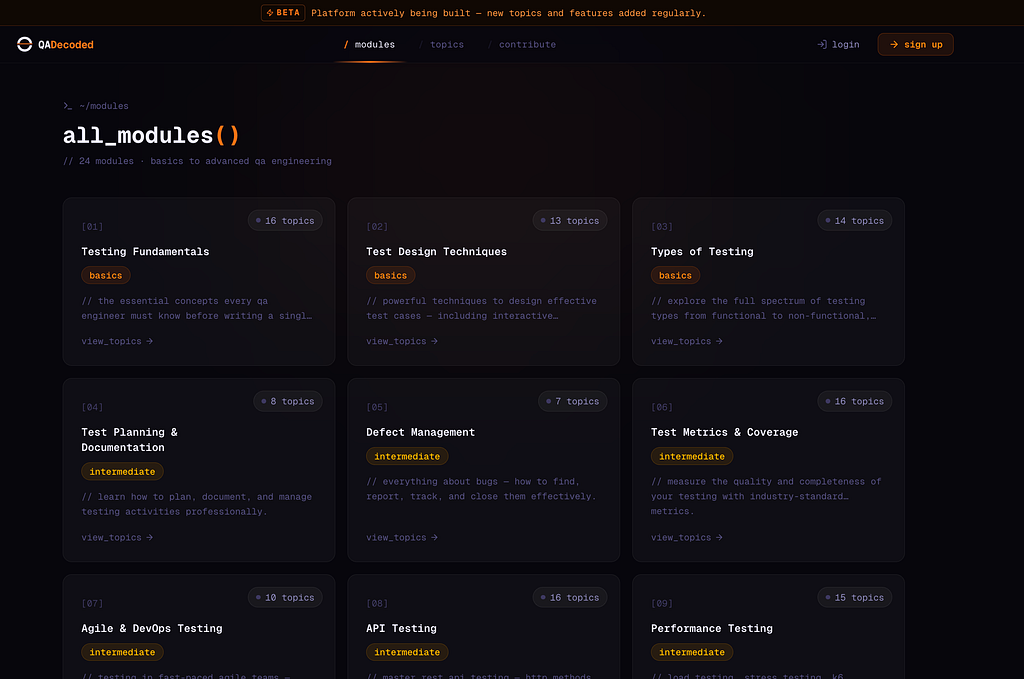
Yes, it’s aimed at juniors. But that’s exactly why I think experienced engineers should pay attention to it. The gaps I see in real teams usually aren’t “advanced technical” gaps — they’re foundational ones.
What Hooked Me
The best thing on the site is how concepts are explained using real products and realistic scenarios.
Not the classic: “Imagine a login page…”
Instead, they use actual named platforms and real feature examples. The explanations feel connected to how software behaves in the wild. Most QA content stays too abstract; the examples here felt closer to the way I’d explain concepts to a new hire during onboarding.
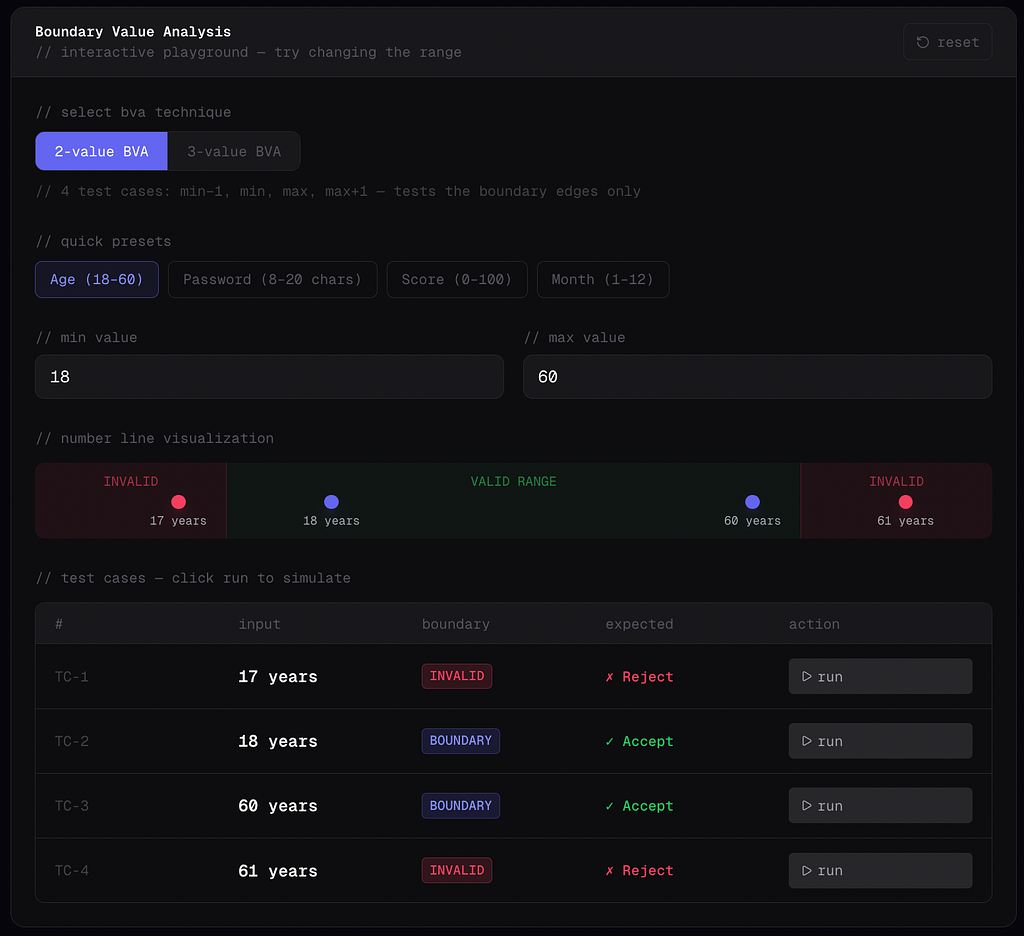
The Visualizations: This was the “Aha!” moment for me. They have interactive visual explanations that are cleaner than most of our internal documentation. I actually ended up sending a link to their BVA tool to two engineers on my team. I didn’t expect to be pulling links from a “beginner” site into a professional team context, but here we are.
The Fair Critique
To keep this honest, it’s not a perfect platform:
The Polish is Uneven: You can tell parts of the site are still evolving. Some modules are incredibly deep; others feel like a skeleton waiting for more content.
Why This Matters in the Age of AI
AI is changing how we learn. The upside is faster ramp-up time; the downside is that people can now produce output without developing deep understanding.
But testing isn’t just executing steps. It’s reasoning:
- Why is this risky?
- What assumptions are hidden here?
- What happens at the boundaries?
Those instincts come from fundamentals. Not prompts.
The Takeaway
I didn’t come here looking for a resource to recommend. I came looking for a quick answer for someone on my team. I left with a link I’ve already shared three times.
That’s the ultimate test: “Will I use this again?”
For me, the answer is yes.
Free. No card. No catch. 👉 qadecoded.com